Stretching exercises with your horse can be very beneficial in increasing and maintaining suppleness/flexibility, core strength, balance, and reducing chances of injury and tension. Here are my top tips as an equine bodyworker for safely getting the most out of your stretching session:
 Always perform stretches when the horse’s muscles have been warmed up first. This will allow for a better stretch, and you’ll be less likely to pull or strain a muscle.
Stretching should be done routinely: at least three times a week to make a positive difference.
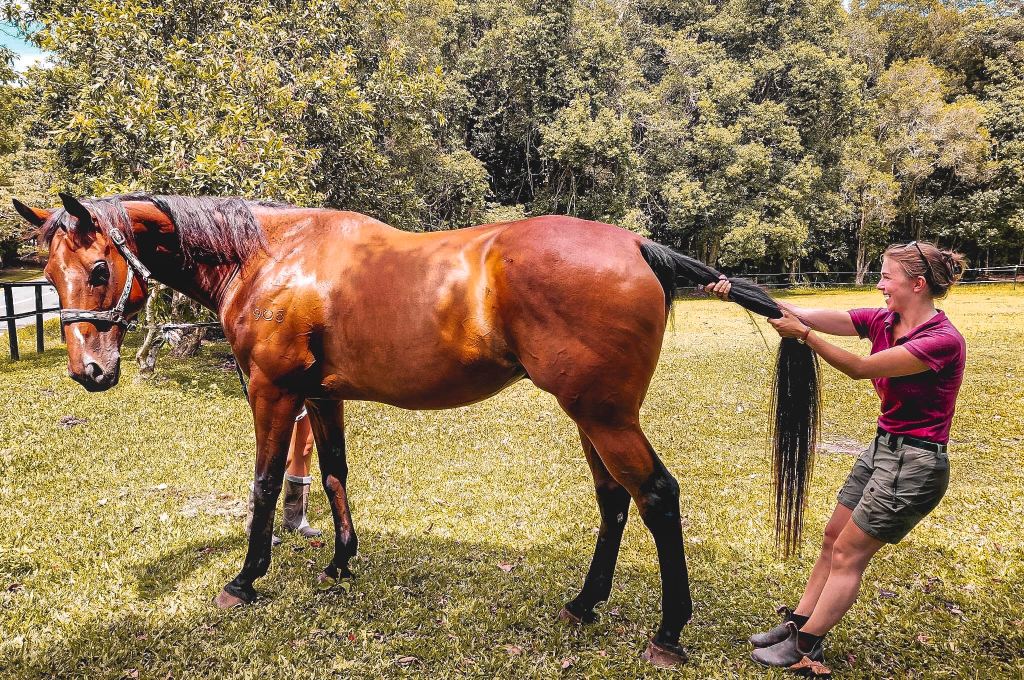
Always stretch within the horse’s limits. Stretches should be done with the horse to avoid over stressing soft tissues and joints, they should never be forced. If the horse doesn’t want to do a stretch, don’t force them.
For neck/carrot stretches, I like using a lick that you can hold instead of something that can be easily snatched. A lick can also encourage your horse to hold the stretch for longer!
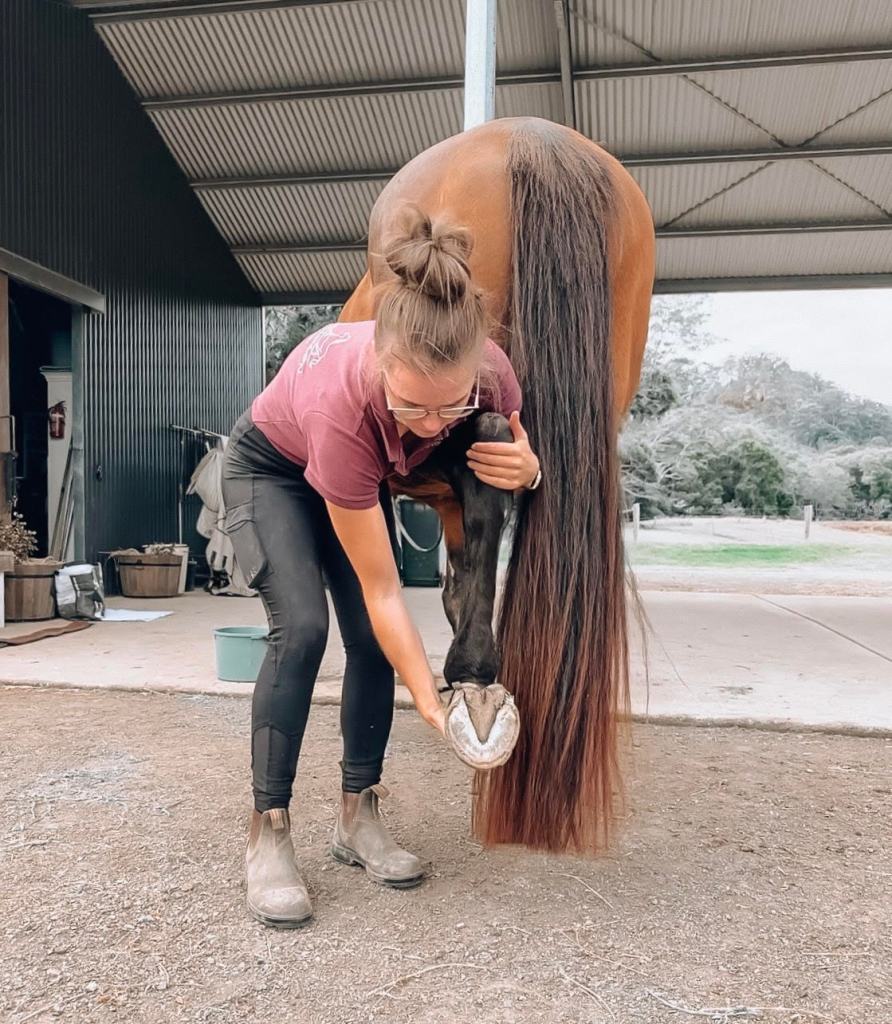
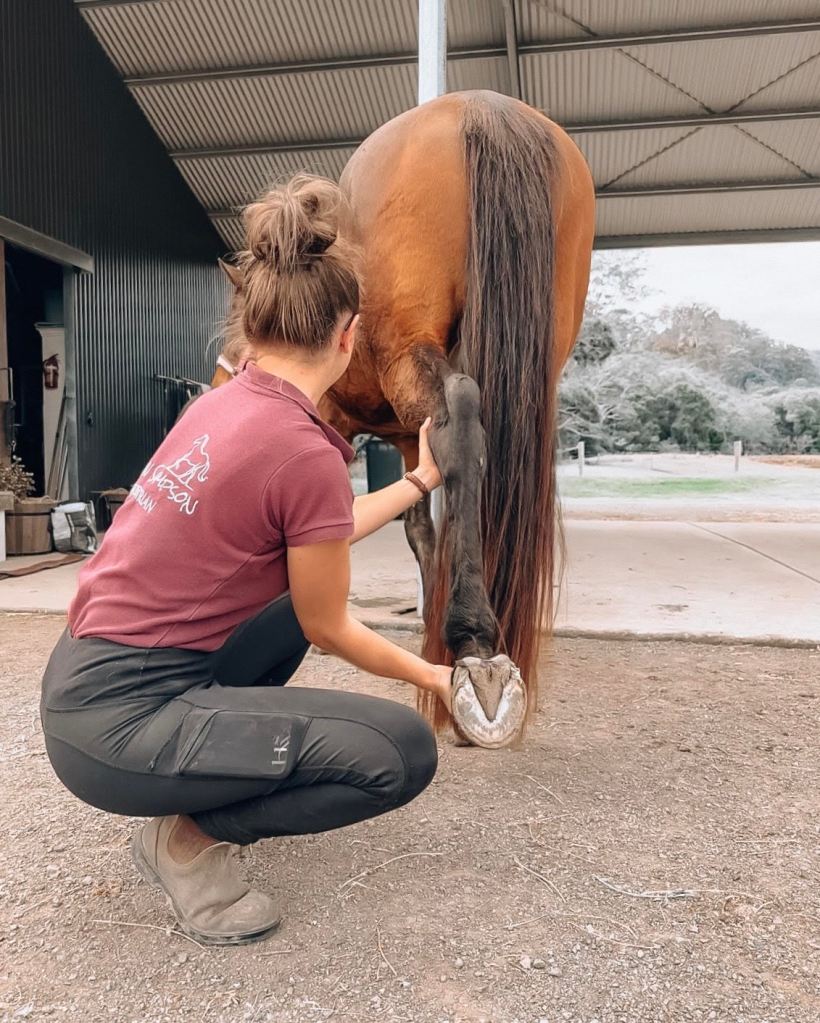
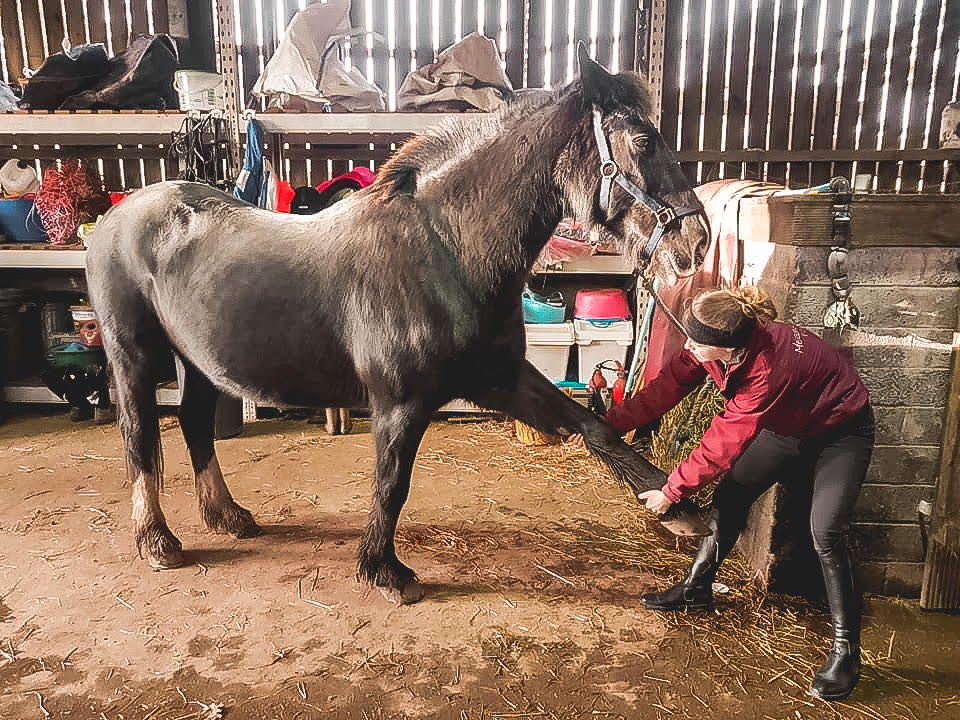
Support joints while stretching where possible, i.e. support the knee during a foreleg stretch.
Performing stretches on level ground and where your horse feels comfortable will aid in a better stretching session.
Be mindful of how your horse is standing. Are they balanced enough to do the stretch you’re asking? Are they standing as square as possible?
Hold stretches for at least 10 – 15 seconds. Sometimes even five seconds is enough to begin with, depending on the horse. By holding a stretch, you’re allowing time for muscle spindles to stretch and adapt to the new length. If your horse is comfortable and enjoying the stretch, you can hold it for up to 30 seconds. The length of time you can hold a stretch for very much depends on the horse and their individual issues, so if you’re unsure, contact your therapist/bodyworker!
Do not yank, jerk, or pull sharply while stretching. This will trigger a myotatic reflex. The myotatic reflex is the reflex contraction of a muscle that is triggered when the muscle is stretched too quickly. The purpose of this reflex is to resist changes in muscle length to protect from injury/tearing the muscle, so stretches must be done slowly and within the horse’s limits in order to avoid this reaction and gently allow the muscle time to readapt.
Lastly, always try to keep yourself as safe as possible! Stand close to your horse, use a soft grip so you can let go of the limb if the horse pulls away, and bend your knees to protect your back when lifting and bending.
Always consult with your bodyworker/physical therapist or vet before undertaking stretches if you’re unsure or your horse has any physical issues, as stretching can cause injury when done incorrectly, and some stretches may make problems worse.

 Megan Simpson Equestrian